Responsible scuba diving tips that every diver should know
Have you thought about the impact your presence underwater has on the environment? Scuba diving offers something few experiences can. It’s a chance to immerse ourselves in a different side of the world from the one we experience every day. But with that privilege comes a responsibility to help protect the places that bring us joy and sustain life on this planet.
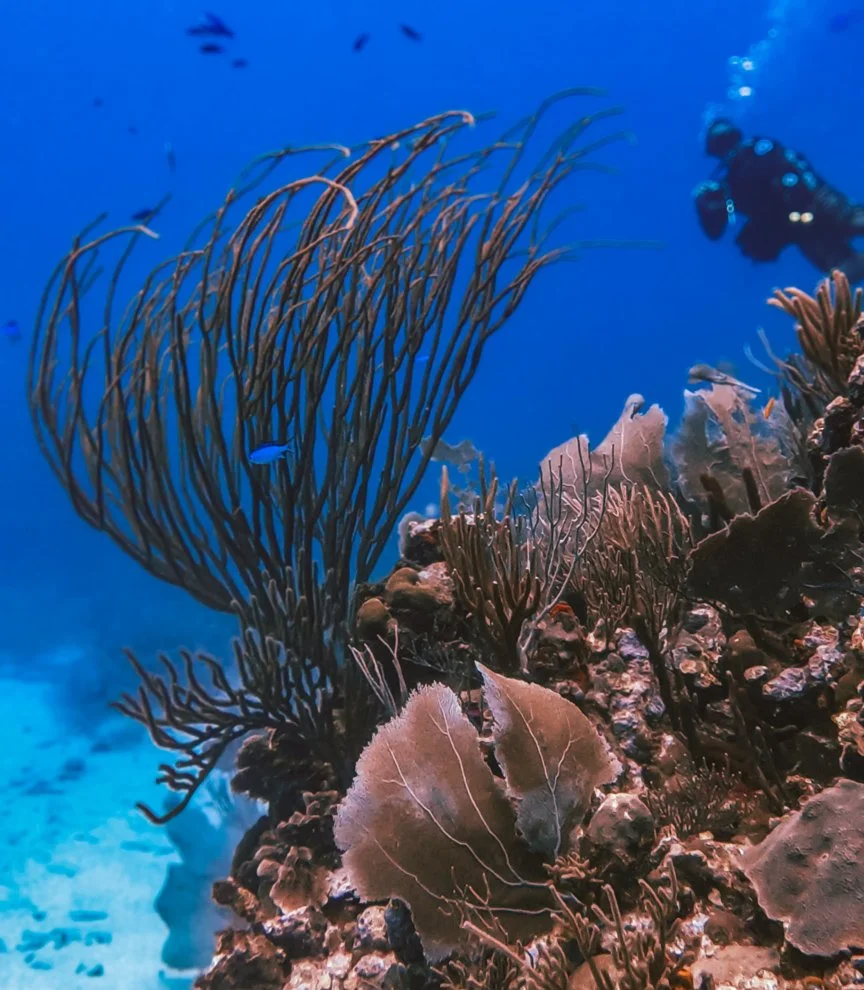
A scuba diver observes a reef from a respectful distance in La Parguera, Puerto Rico.
As divers, we can appreciate what lies beneath the surface in ways others can’t. Diving allows us to get up close to coral reefs, marine life, and ecosystems that have developed over thousands of years. Understanding how we impact these ecosystems when we scuba dive can help the dive sites we enjoy thrive today and be around for generations to come.
Let’s go over some fundamentals of “reef etiquette” as we invite all divers to reflect on the importance of caring for our ocean.
What is environmentally responsible scuba diving?
Responsible scuba diving means diving in ways that minimize our impact on coral reefs, marine life, and underwater ecosystems before, during, and after every dive.
While recreational scuba diving is generally considered a low-impact activity when compared to overfishing, pollution, and other human activity, even small actions can unintentionally harm fragile marine environments. A misplaced fin kick, a dangling pressure gauge, or the temptation to take a souvenir home can harm organisms that may have taken decades to grow.
Fortunately, protecting the reef doesn't require extraordinary effort. By building good habits and staying mindful underwater, every diver can help preserve the dive sites that bring us so much joy.
Why reef etiquette matters
Coral reefs are among the most diverse ecosystems on Earth. But beyond their intricate beauty, coral reefs have valuable ecological functions. They provide habitat for thousands of marine species and improve climate resilience by providing coastline protection from hurricanes and erosion. Plus, reefs are a source of food and shelter to numerous marine species.
Despite their strength as ecosystems, individual coral colonies are surprisingly fragile. Corals are living animals, not rocks or plants. Some reef-building corals grow only a few centimeters each year, meaning accidental damage can take years to recover.
Plus, marine ecosystems worldwide already face threats of human activity, habitat degradation, climate change, ocean acidification, overfishing, pollution, and invasive species like the lionfish. Coral reefs in particular are experiencing increased threats posed by coral bleaching.
When hundreds of divers visit the same reef over time, small impacts can add up. Practicing reef etiquette and responsible scuba diving is about reducing cumulative damage so reefs can continue to thrive.
The good news is that responsible diving practices are simple to learn and quickly become second nature.
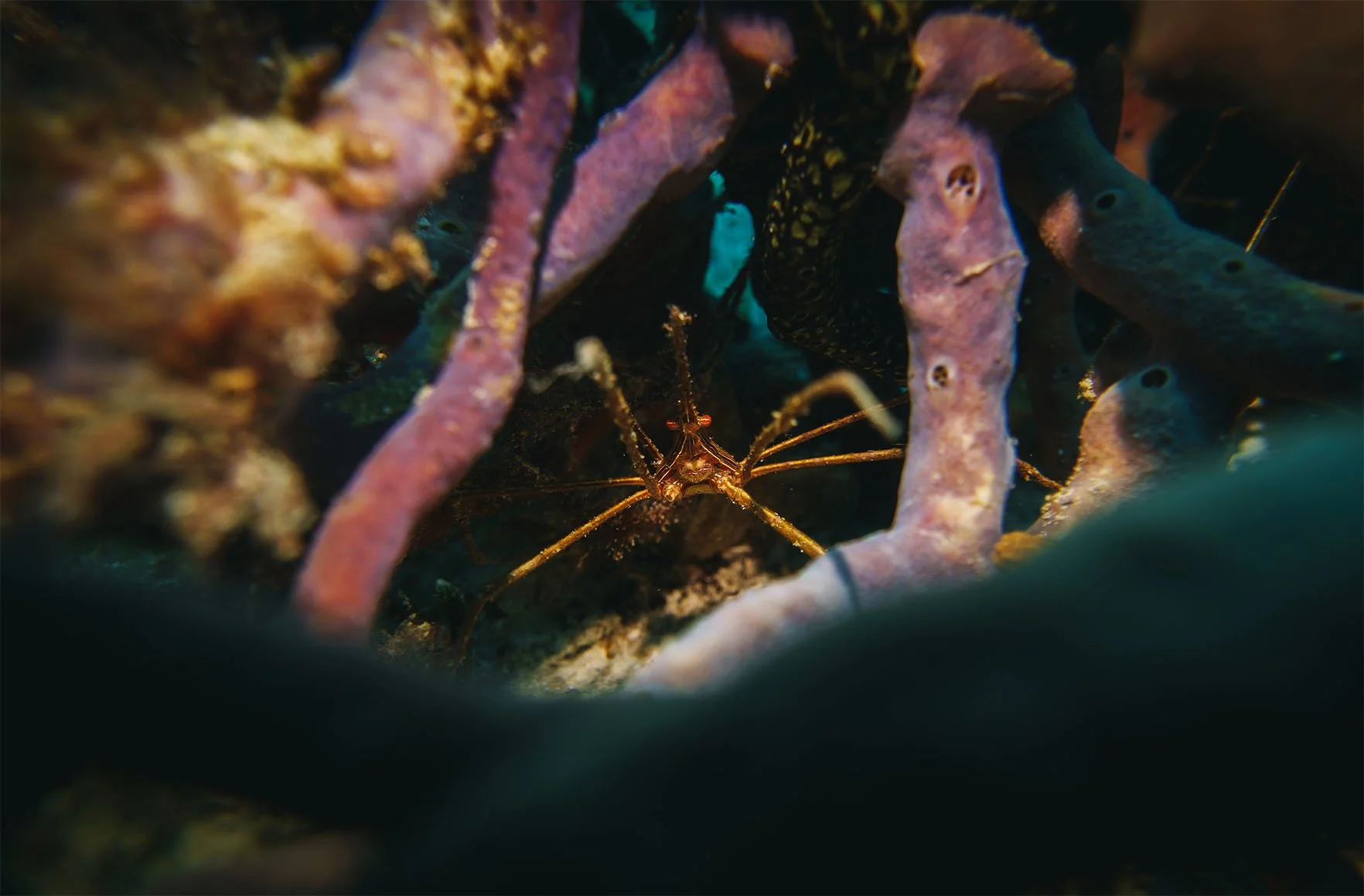
A spider crab hides among coral. Courtesy of Marcos Borsatto.
Responsible scuba diving practices every diver should follow
Improve your buoyancy
Arguably, this is likely single-handedly the most important item on this list. That is because buoyancy is a skill that all divers, those new to diving and more experienced divers alike, must continuously practice. Failing to do so not only has an impact on your air consumption, safety, and diving experience, but also on the wellbeing of the reef.
You may consider yourself a diver who does no harm: you don’t touch coral, you don’t harass marine life, you don’t leave trash behind. But poor buoyancy control and lack of spatial awareness can mean that you unconsciously kick, break, bump, scrape, or disturb coral reefs.
Improving your buoyancy requires divers to consider their weighting, diving position, finning technique, equipment configuration, and more. If you're struggling to achieve neutral buoyancy, consider taking a buoyancy specialty course with your certifying scuba diving agency.
Practice different finning techniques
Good finning technique is closely related to buoyancy control. It’s beneficial for divers to practice different finning styles in order to use them according to the situation or environment they are diving in. This is especially useful when we aim to minimize our impact on the marine environment.
Many divers begin learning to dive using flutter kicks, which are a quick and easy way to get around the water. However, in areas with restricted mobility or a large amount of sediment, techniques like the frog kick, helicopter turn, or reverse frog kick may be more appropriate for reducing your impact on the marine environment.
When scuba diving, remember that large fin kicks close to the bottom can:
Break fragile coral
Disturb marine life
Stir up sediment that reduces visibility
Smother nearby organisms with sand.
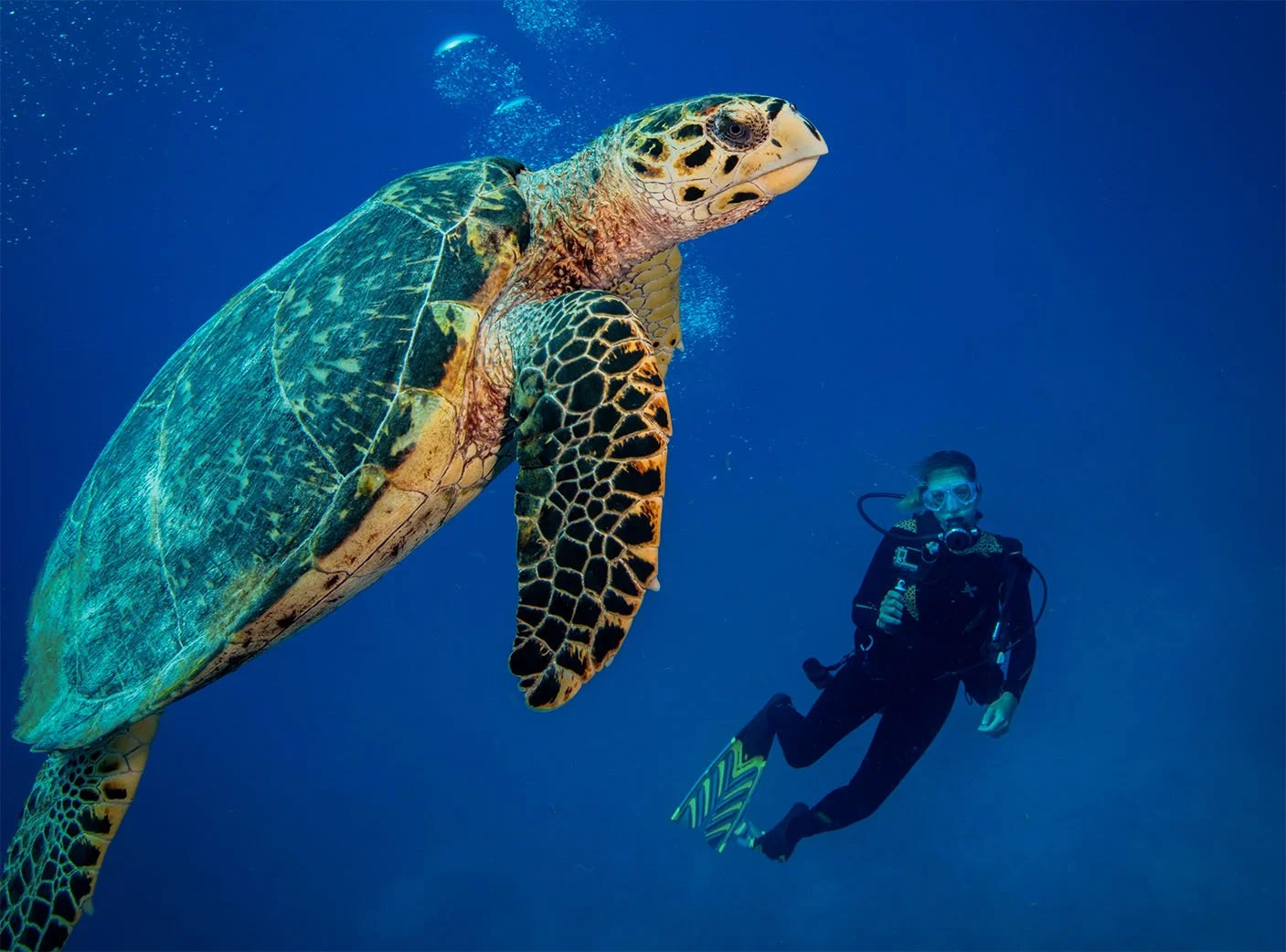
A scuba diver observes a hawksbill sea turtle from a distance.
Secure loose equipment
Loose gauges, alternate air sources, cameras, and accessories can unintentionally bump into delicate marine life without you realizing it. Using clips, retractors, and checking your equipment configuration for loose items makes a big difference in avoiding accidental damage to coral reefs.
Plus, dangling items are a big risk to divers themselves. Items that are protruding from the body or not properly secured pose a risk of entanglement. Getting your equipment tangled with other divers, ropes, fishing lines, or marine life can lead to panic or issues underwater.
Check your gear and ask your buddy during your pre-dive check whether you have any loose items before entering the water.
Observe marine life respectfully
One of the greatest joys of scuba diving is encountering wildlife in its natural habitat. But remember that as divers, we are guests in their home.
Give marine life plenty of space, avoid blocking an animal's path, and resist the urge to chase, corner, or touch wildlife for a better photograph.
If an animal chooses to approach you, enjoy the moment, but let the interaction happen on its terms.
Leave no trace (leave only bubbles)
If you also enjoy hiking, camping, or other outdoor activities, you may be familiar with the “leave no trace” principles. These are a set of guidelines designed to promote conservation and minimize human impact on the outdoors.
A similar approach can, and should, be applied to scuba diving. While most of the other tips on this list focused on avoiding unintentional harm, this principle focuses on your conscious choices.
Resist the temptation of taking home souvenirs. Leave seashells, corals, and other natural objects where you found them. What looks like an empty shell may provide shelter for another animal.
If you encounter trash underwater, consider removing it if it’s safe for you to do so. Once you're out of the water but before heading home, remember to soak receptacles like bottles and cans, as small marine life may be hiding inside. If you do find that a tiny creature was hiding inside, return it to the ocean before properly discarding trash.
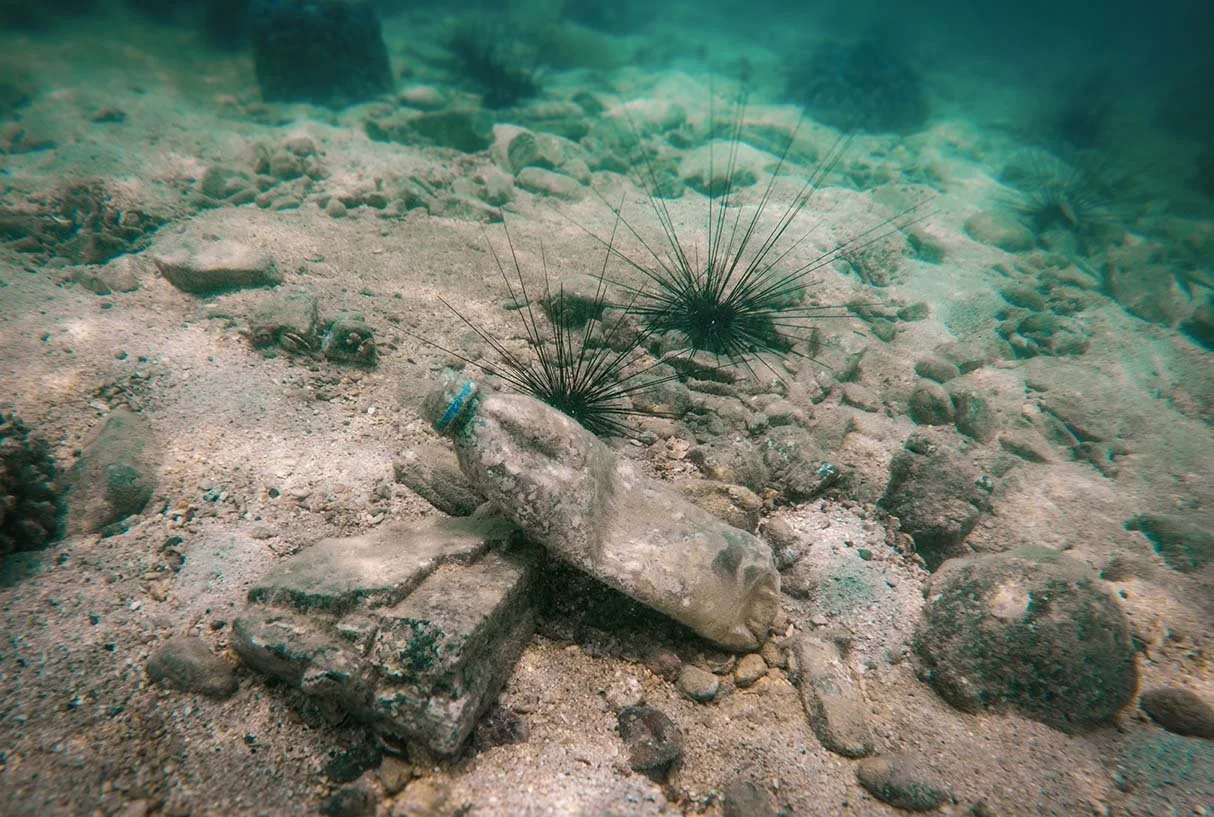
Single-use plastic like plastic bottles are often found by scuba divers underwater.
Think of marine conservation before your dives
Responsible scuba diving practices can begin before you get in the water. Consider adopting these environmentally friendly habits:
Choose dive operators that prioritize sustainable practices and reef protection.
Bring a reusable water bottle to reduce single-use plastics.
Properly dispose of trash and recycling whenever possible.
Follow local regulations within marine protected areas.
Wear protective clothing such as rash guards to reduce sun exposure. If opting for sunscreen, choose sunscreens designed to minimize impacts on marine ecosystems.*
*Regarding reef-safe sun protection: Although “reef-safe sunscreen” has become a popular marketing term, it is not internationally regulated. If possible, wearing sun-protective clothing can reduce the amount of sunscreen that enters the marine environment.
When evaluating sunscreen options, look for products without harmful chemicals such as oxybenzone and octinoxate. Stream2Sea is a brand popular amongst eco-conscious divers, and the Stream2Sea Coral Care line has been endorsed by the Perry Institute for Marine Science as “reef positive.”
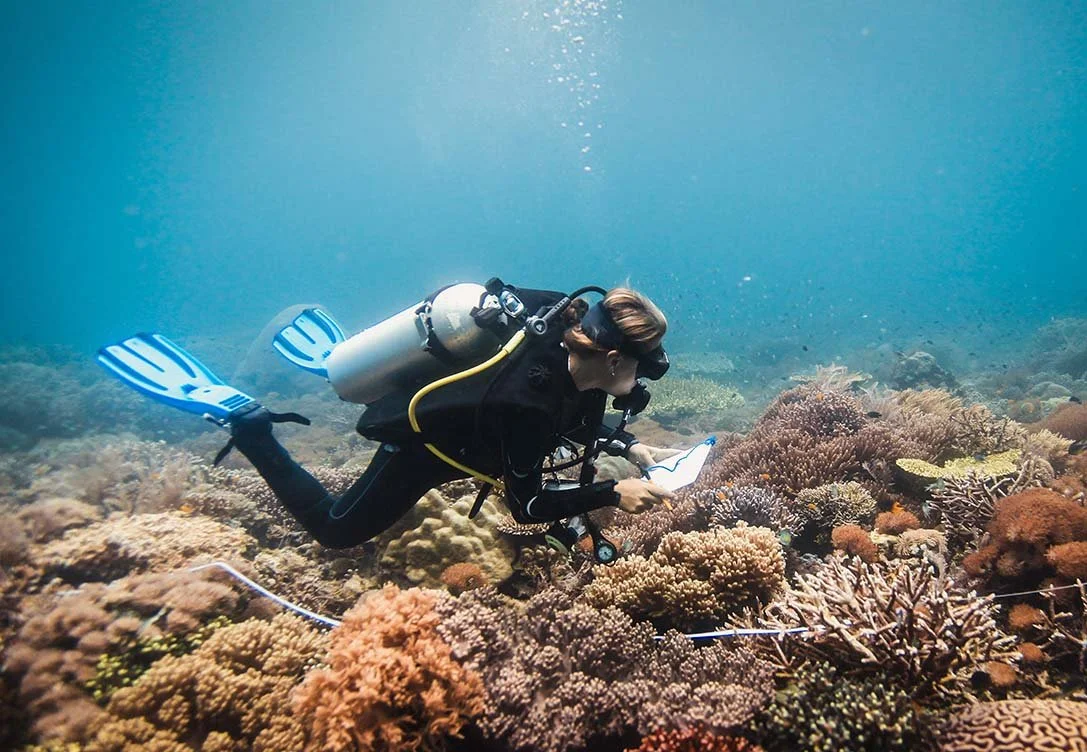
Scuba diver collects data of a coral transect underwater.
How can scuba divers support marine conservation beyond their dives?
Divers are uniquely positioned to contribute to marine conservation because they deeply understand the importance of marine ecosystems. Plus, they have a special skill: they can spend a lot of time underwater.
This skill can be particularly valuable to scientists and organizations focused on marine research, conservation, and restoration.
As a scuba diver, you can contribute to marine conservation during or beyond your dives. Consider if you can:
Share responsible diving practices with other divers.
Support businesses that prioritize sustainable tourism and conservation. Green Fins is one resource that can help you explore scuba centers committed to protecting marine environments.
Participate in underwater cleanup events. Local divers can check out organizations like Surfrider Puerto Rico and the Scuba Dogs Society.
Organize or encourage your local diving community to take part in data collection programs like PADI’s Dive Against Debris or the Global Shark and Ray Census.
Join citizen science projects that need support from scuba divers. Local divers can check out Isla Mar, Surfrider Puerto Rico, and seasonal initiatives by the Puerto Rico Department of Natural and Environmental Resources.
Volunteer with or donate to marine conservation organizations. Local divers can check out ISER Caribe, Sea Grant Puerto Rico, Conservación Costera (CoCo), and Conservación Conciencia.
Turn any dive into useful data
You may not have the availability to join formal volunteer opportunities, but did you know you can turn any dive into useful data for scientists?
When you dive, you are able to gather valuable information like marine life abundance, coral reef conditions, water conditions, water temperature, and more. By submitting data from your dives, you can help support monitoring and conservation efforts that require large amounts of data.
You can help scientists globally by recording sightings on online platforms like iNaturalist or through initiatives like the REEF Invertebrate and Algae Monitoring Program and Project Baseline.
Even reporting unusual observations—such as coral bleaching, invasive species, or marine debris—to local conservation organizations or authorities can be a way to leverage your time underwater for good.
Every diver has the power to make a difference, whether it’s through small, individual actions or collective volunteering. By making thoughtful choices before, during, and after our dives, we can help conserve the underwater environments that make scuba diving so extraordinary and that sustain life on earth.